Asbestos in Schools, Offices, and Public Buildings:
What Gloucester Managers Need to Know

Despite the passage of time, asbestos continues to be one of the most serious occupational health risks in the UK. According to figures provided by the Health & Safety Executive, approximately 5,000 people annually contract or suffer from serious ailments that result from previous exposure to asbestos. In many of these instances, the exposure took place years back in buildings which seemed perfectly safe and unchanged. If you own any non-domestic building in Gloucester, there exists the likelihood that your property still contains asbestos.

There is no cause for excessive panic; however, it is essential for the duty holder to recognize his/her responsibilities and liabilities in this regard. Asbestos management is a crucial legal requirement in Gloucestershire.

Gloucester’s Buildings and the Asbestos That Came with Them

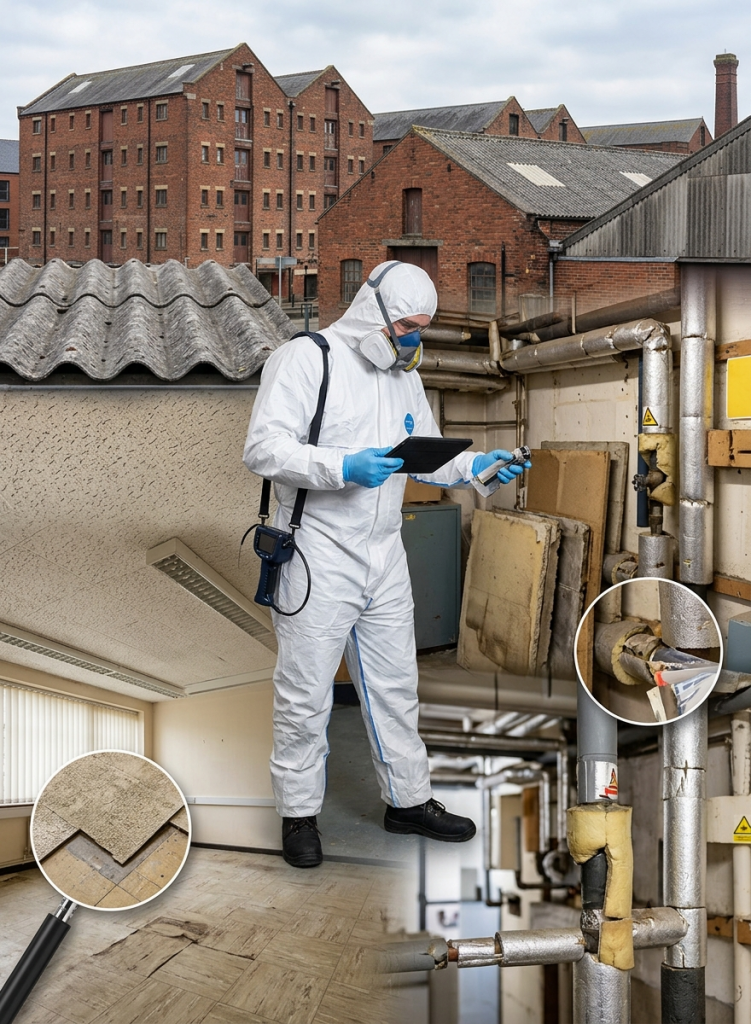
A lot of development has occurred within Gloucester from the 1950s to the 1990s. Asbestos was cheap, fire-resistant and plentiful, so it became a material used everywhere; for roofs in industrial estates near the docks, insulation boards surrounding boilers in post-war schools, textured ceiling finishes in offices, pipe lagging in council properties and community centres. Some of those buildings survive and continue to be used today.

If there is no evidence to the contrary, assume that any property constructed prior to 2000 contains ACMs. Commercial buildings built during the Victorian era, public buildings built post-war, warehouse conversion buildings and office blocks from the 1970s and 1980s are all included within the range of properties within Gloucester, meaning that very few buildings fall outside of this category. Asbestos cement roof sheets were installed regularly over many years in the dock area and adjacent industrial estates.

Duty holders managing properties across the wider region may also require an Asbestos Survey Coventry before maintenance, refurbishment or demolition work begins.

Asbestos comes in more than one material, and that fact complicates everything. Three types found wide use in UK construction: chrysotile, called white asbestos, appears in cement products, Artex coatings, and floor tiles; amosite, or brown asbestos, turns up commonly in insulating boards and thermal insulation; crocidolite, known as blue asbestos, shows up in thermal products and machinery gaskets. Imports of crocidolite and amosite stopped in 1985, chrysotile followed in 1999, yet materials brought in earlier stayed in use long after those dates.

Gloucester Buildings and Historic Asbestos Use

Management Survey vs Refurbishment Survey: Choosing the Right One

Gloucester managers frequently make one particular mistake, commissioning the wrong survey type, or assuming an existing management survey covers upcoming building work.

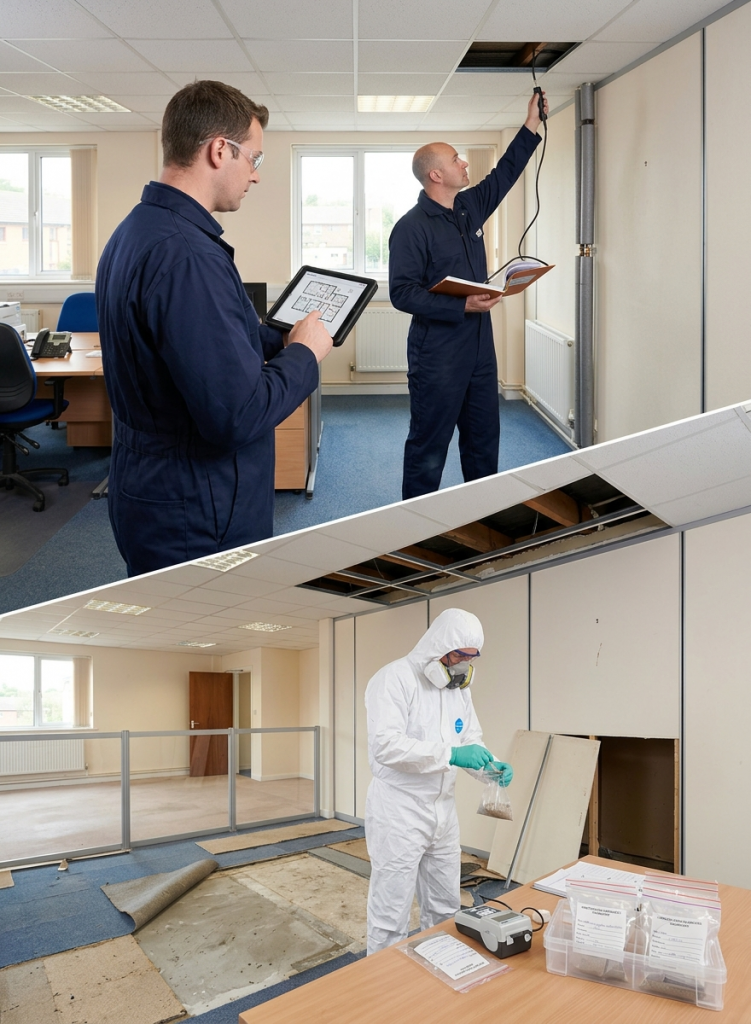
Occupied buildings call for a management survey as the standard approach. Accessible areas get covered without causing significant damage, and ACMs likely to face disturbance during routine occupation or maintenance get identified, producing a detailed report alongside an asbestos register. Offices, schools, public buildings, and any property aiming for ongoing asbestos management suit this survey type well. Site visit to report typically takes three to five working days.

Refurbishment or demolition survey work sits in an entirely different category. Before any refurbishment, structural change, or demolition, a fully intrusive survey becomes necessary. Regulation 7 of CAR 2012 demands the removal of every ACM before major refurbishment or demolition proceeds. Lifting floor coverings, accessing ceiling voids, and examining behind fixed panels all form part of this survey type. Vacating the area under asbestos survey Gloucester becomes mandatory. Beginning refurbishment work based on findings from a management survey commissioned for the wrong purpose ranks among the most common causes of HSE prosecution, a fact that should worry any manager cutting corners.

A UKAS-accredited laboratory receives samples from either survey type, running polarised light microscopy analysis that confirms both the presence and type of asbestos fibres found.

Management Survey vs Refurbishment and Demolition Surveys
Asbestos Survey Process in Gloucestershire

What Actually Happens During the Survey Process?

Most buildings follow a straightforward sequence through the asbestos survey Gloucestershire management process.

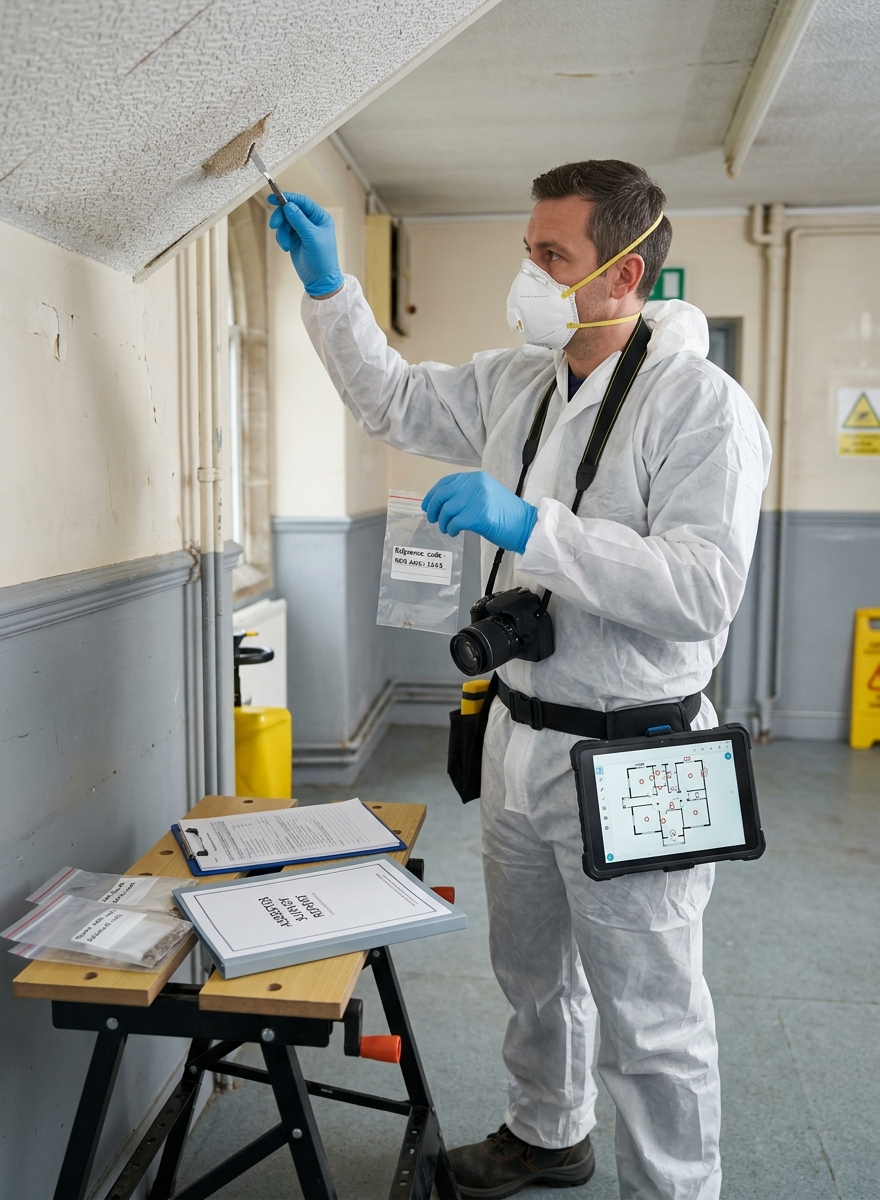
Property age, use, layout, and previous survey history all get established during an initial consultation. Site attendance follows, where the surveyor inspects every reasonably accessible area, photographs each location, and takes small samples of suspect materials using techniques designed to minimise fibre release. Exact location labelling and sealing happen to each sample before laboratory dispatch. Scaled floor plans marking asbestos locations, material risk assessment scores based on condition and disturbance likelihood, photographic evidence, and recommendations for management, encapsulation, or removal, all fill out the resulting report. That report then becomes the backbone supporting the asbestos register and ongoing management plan.

Building size decides how long the site visit runs: a small Gloucester office unit might take a few hours, while a larger school or multi-area public building might demand a full day or more.

Professional Asbestos Testing Cheltenham can similarly confirm the presence and type of asbestos fibres in suspected materials.

After the Survey: What Managers Actually Need to Do

Receiving a survey report marks no ending point in this process. Ongoing legal compliance begins right there.

Where damaged ACMs create an unacceptable risk, property managers in nearby areas can arrange professional Asbestos Removal Coventry following the survey recommendations.

Creating or updating the asbestos register falls to the duty holder once the report arrives, alongside preparing a site-specific management plan, informing contractors and maintenance staff of ACM locations before work starts, labelling materials where fitting, scheduling periodic re-inspections, and arranging licensed asbestos removal Gloucester wherever materials show damage, deterioration, or likely disturbance from planned works.

Materials in good condition, unlikely to face disturbance, can often stay exactly where they sit under a management regime. Professional assessment must support that decision, properly documented rather than decided informally by a site manager or caretaker, a distinction carrying serious weight.

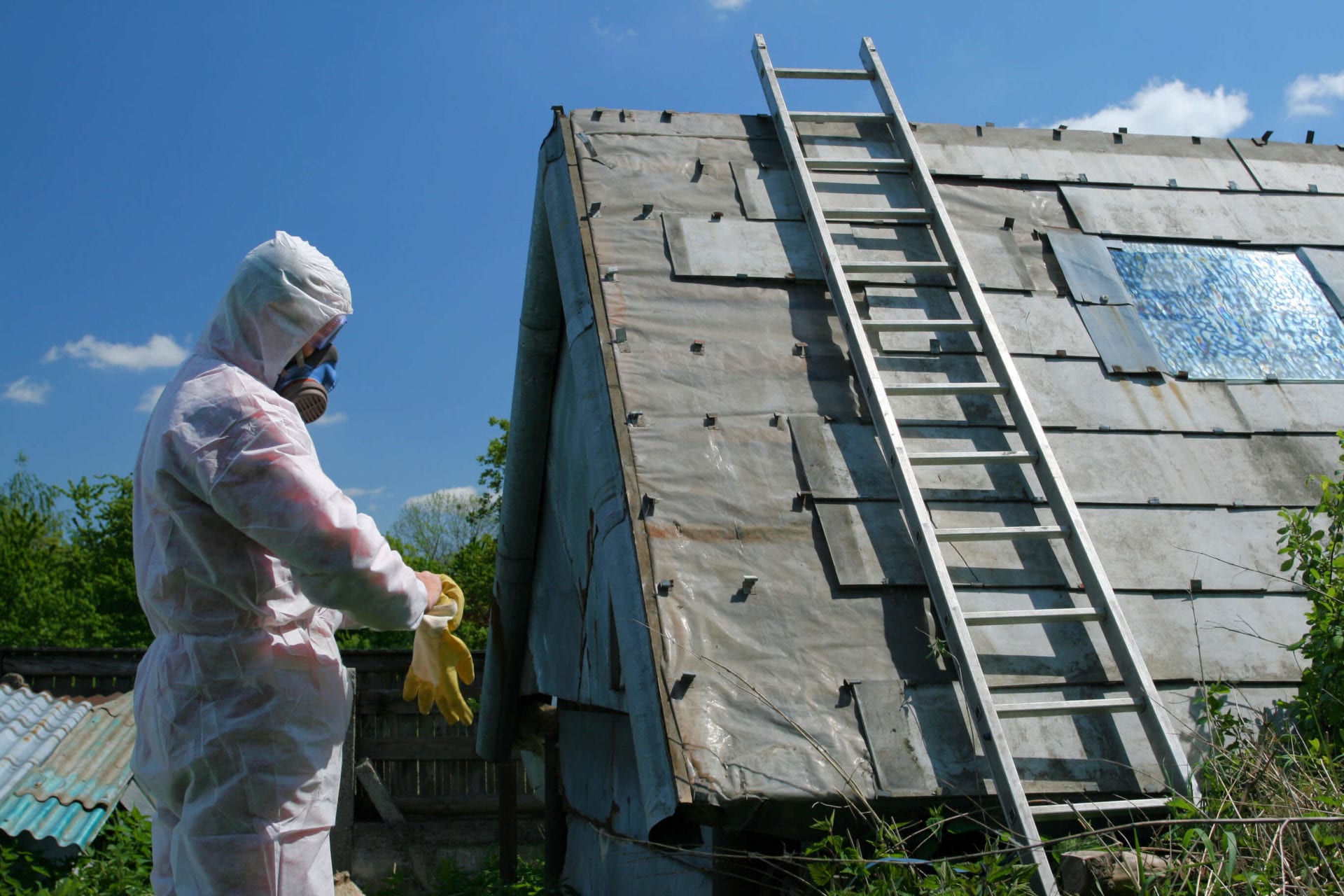
Asbestos removal worker. Dangerous waste disposal - professional works with old architecture.

A Note on Ledbury Surveys Ltd

Gloucester and the wider UK fall within the reach of Ledbury Surveys Ltd, bringing over 20 years of civil engineering and construction experience, a decade of which focused purely on asbestos and health and safety consultancy. P402 bulk survey and sampling qualifications sit alongside BOHS S301, NEBOSH, and CSCS Platinum site management credentials among their lead surveyors, and fully UKAS-accredited facilities carry out all laboratory analysis. Regulatory knowledge paired with hands-on survey experience matters greatly for Gloucester managers navigating CAR 2012 requirements, particularly given how serious these stakes truly are.

Get in Touch with Ledbury Surveys Ltd!

If you require expert assistance with asbestos removal or testing in Coventry or surrounding areas like Earlsdon, Allesley, Binley, Canley, Bannerbrook Park, Coventry City Centre, Hillfields, Barras Heath, Kenilworth, or Holbrooks, contact us today!

Call us at 01684 303 470 or 07738 246 916 or fill out our contact form for a consultation or quote.

Frequently Asked Questions

Does My Gloucester Building Need an Asbestos Survey If Built After 1990 But Before 2000?

Yes, without question. Treat any building built or refurbished before the year 2000 as a potential holder of asbestos, unless definitive evidence proves otherwise. The UK ban on chrysotile asbestos only took effect in 1999, meaning materials used in the late 1990s could still remain present today. Confirming whether ACMs exist, along with their condition, relies entirely on a professional management survey as the sole reliable method.

Am I Personally Responsible for Asbestos Compliance as A Gloucester School Headteacher Or Facilities Manager?

Your school’s status decides the duty holder under CAR 2012 Regulation 4. Community and maintained schools typically place this role with the local authority. Academies and free schools shift responsibility toward the Academy Trust instead. Governors carry this burden for voluntary-aided and foundation schools. Shared duty sometimes emerges, particularly where local authority budgets for building maintenance are delegated down to the school itself. Uncertainty on this point should send you seeking professional advice, and that step matters greatly before any maintenance work gets planned.

What Separates an Asbestos Management Plan from An Asbestos Register?

Location, type, condition, and extent of every confirmed and presumed ACM found in the building make up the written record called an asbestos register. A working document setting out control methods, responsibility assignment, contractor notification, re-inspection timing, and required action if materials deteriorate or planned works approach an ACM location, describes the asbestos management plan instead. Legal requirements bind both documents for most non-domestic premises across Gloucester, and keeping both current stays equally mandatory.

Must Asbestos Be Removed Immediately Once Found in My Gloucester Office Or Public Building?

Not necessarily, and relief often follows this answer for worried managers. Automatic removal of every ACM finds no requirement under CAR 2012. Good-condition materials, carrying no realistic disturbance risk during normal occupation or maintenance, can legally stay in place under a management plan paired with regular re-inspection. Damage or deterioration triggers removal necessity, alongside planned refurbishment or demolition work threatening disturbance, or a risk assessment concluding that leaving materials in place creates unacceptable risk. Only an HSE-licensed contractor may carry out the removal of high-risk materials.

How Often Should a Gloucester Non-Domestic Building Update Its Asbestos Management Survey?

Review and update obligations for the asbestos register and management plan apply whenever known ACM condition changes, following any maintenance or building work, before any refurbishment work starts, and periodically regardless of change, confirming materials stay stable. Annual visual re-inspections form the minimum schedule for many duty holders. No fixed expiry date attaches to the management survey itself, yet significant condition change, planned works, or a survey several years old paired with altered building use should prompt consideration of a new or updated survey.